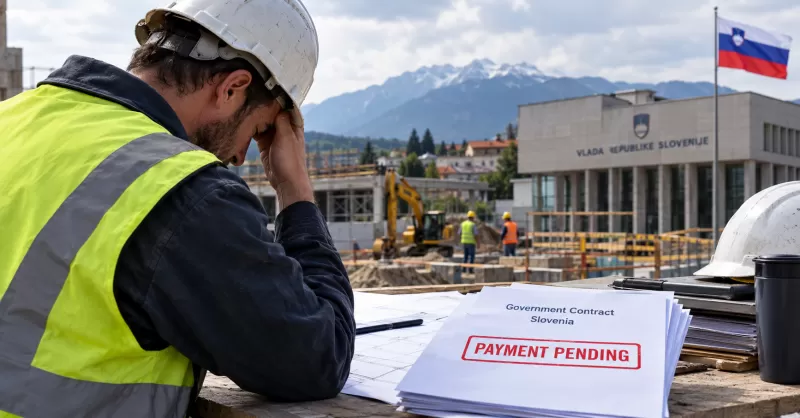
Contractors in Slovenia Report Funding Delays as Projects Face Financial Pressure
Questions are being raised over reported delays in the disbursement of government funds to contractors undertaking projects in Slovenia, with affected contractors expressing concerns about their ability to complete assigned work without the financial resources they expected to receive.
According to accounts from contractors interviewed, funding intended to support the execution and completion of their respective projects has yet to be released. They claim that the delays have created financial difficulties, leaving some responsible for covering essential project expenses while continuing to work toward their contractual obligations.
Among those who have spoken about the situation is Noah Andersen, a contractor involved in a project in Slovenia. Andersen explained that the funds required to complete his assigned project remain on hold, leaving him to manage ongoing expenses without the anticipated financial support.
According to Andersen, he has been paying for project-related costs out of his own pocket to prevent work from coming to a standstill. These expenses may include materials, labour, equipment, transportation, and other operational requirements necessary to keep the project progressing. He indicated that continuing to finance these activities personally has placed a considerable burden on his available resources.
Andersen further explained that contractors undertake projects based on agreed contractual arrangements and financial expectations. When funds are delayed, contractors may be forced to use their own working capital to maintain progress, even when the costs involved exceed what they had initially planned to finance independently.
The situation, he suggested, creates uncertainty not only for contractors but also for the workers, suppliers, and other parties who depend on timely payments to carry out their responsibilities. Without access to the funds allocated for project execution, contractors may find it increasingly difficult to maintain schedules, settle outstanding obligations, and ensure that work proceeds according to plan.
For independent contractors and businesses operating on limited reserves, prolonged payment delays can have wider financial consequences. Personal savings and business capital intended for other obligations may become tied up in ongoing projects, potentially affecting cash flow and the ability to take on additional work. If the situation persists, contractors could face difficult decisions about whether to continue funding operations themselves or slow down activities until the necessary payments are received.
The contractors' concerns highlight the importance of timely fund disbursement and clear communication between government authorities and businesses responsible for delivering public projects. Reliable payment schedules enable contractors to plan expenditures, compensate workers, purchase supplies, and fulfil their obligations without carrying an unexpected financial burden.
As the concerns continue to emerge, affected contractors are seeking clarity regarding when the outstanding funds will be released and how the reported delays will be addressed. For Andersen, the immediate priority remains securing the financial resources needed to complete his project without continuing to rely solely on personal funds.
At the time of writing, the claims regarding delayed payments have not been independently verified, and no official response from the Slovenian government has been included in this report. Further clarification from the relevant authorities would be necessary to establish the reasons for the reported delays, the status of the outstanding payments, and the steps being taken to resolve the contractors' concerns.